
Unique wedding invitation ideas that feel like the two of you
By Saath Studio’s founders, who planned their own wedding in 2025. Updated 23 October 2026.
We got married in 2025. Our invite took weeks of drafts with an agency, could have been anyone’s, and didn’t even open well on our relatives’ phones. These are the ideas we wish someone had handed us, most of them borrowed from customs your family already loves, and a few that need nothing more than a pen.
1. Put your roka on the front page
A roka is often fixed within days, and the news reaches the family group long before any card does. So make the card the news. Akhbaar turns your engagement into the front page of The Shaadi Times, with your names in the headline, your photo in print, the date in the dateline and every function inside.
It suits families who still read the paper over morning chai, and couples who don’t mind a little fun at their own expense. It comes in Hindi too. Choose a photo where you can both be recognised at a glance, because most guests will see it at phone size.
Send it the day after the roka, while everyone is still asking for photos.
See it with our names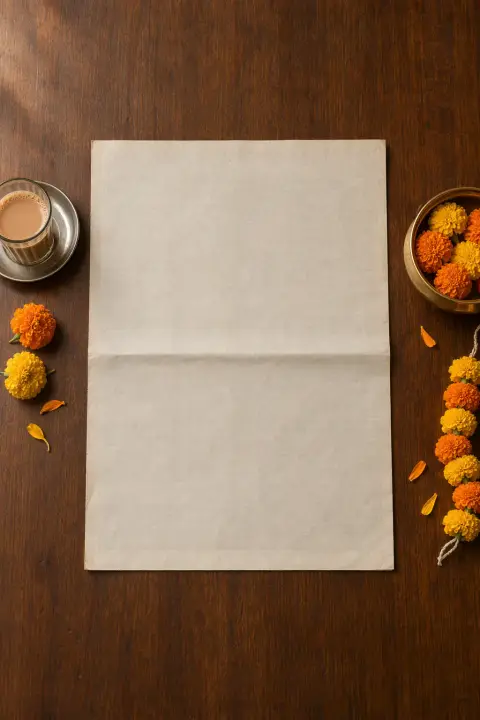
2. Send the save the date on WhatsApp first
Most of your family will hear the date on WhatsApp, so design for a phone screen first. A save the date needs only your names, the date and the city. Add a story card for your status and you’re done.
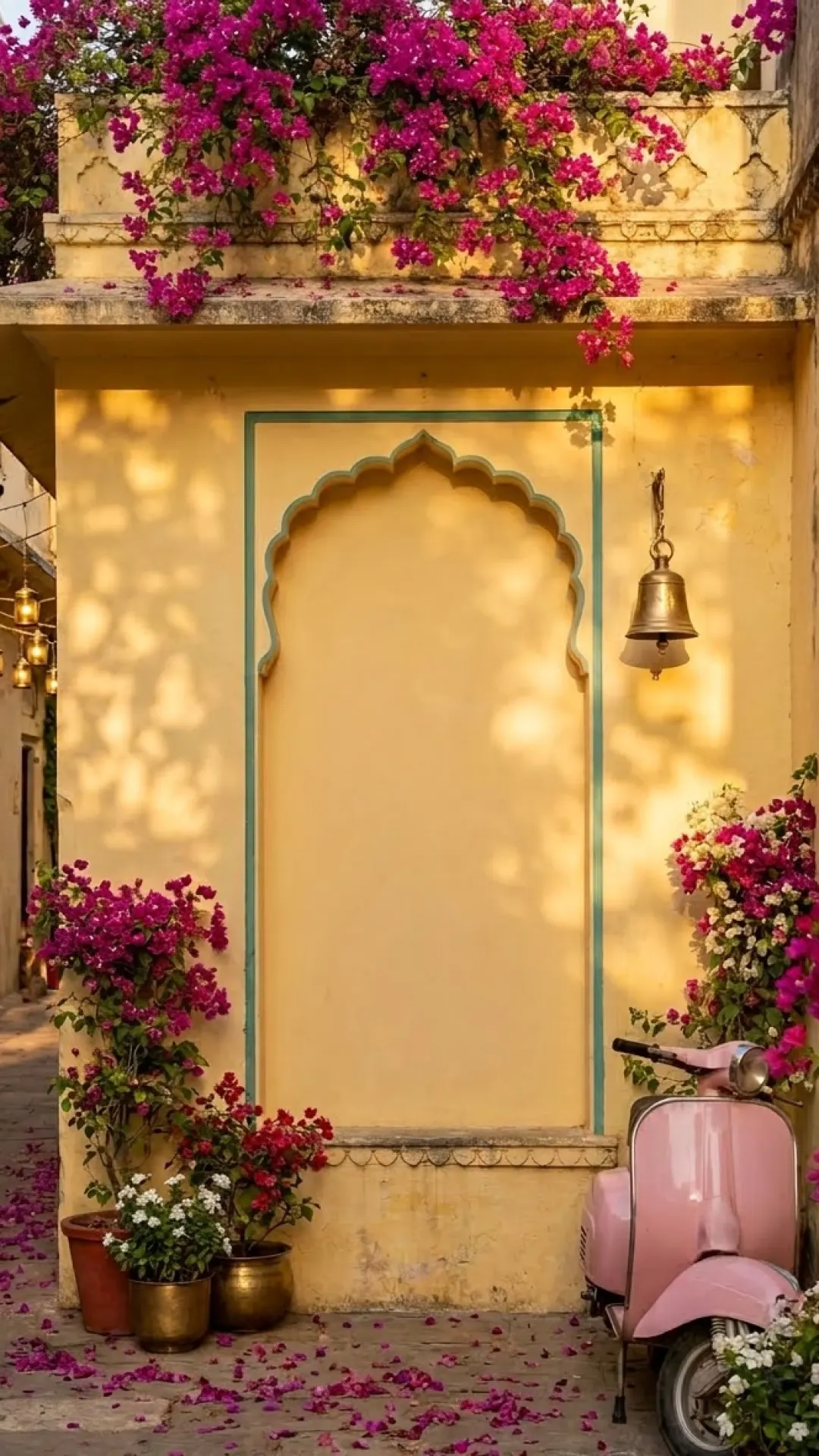
Hum Dono makes it a scrapbook page about the two of you: your photo taped down, an arrow and a label for each of you, and stickers of what you love, from momos to cricket. Gulabi Gali, a golden-hour walk down a pink lane, is the Royal version.
Send it three to twelve months ahead, and six or more if guests have to travel. One line is enough with it: “Save the date! Tanya and Vikram are getting married on 14 February 2027 in Udaipur. Keep the day for us, the invite follows soon.”
Make our save the date
3. Make your logo before anything else
A wedding logo is what turns a pile of cards into a set. Make it first, and the save the date, the invite, every function card and the thank-you all carry the same mark.
Two directions suit Indian families well. Your initials entwined, one in Hindi and one in English, with a painted lotus or parakeet. Or a story map, part of Royal: your initials ringed by the little things that make you two, like chai, the hills, late nights and an 11:11 clock. You can also have one painted for you from a short brief about a place you love, your work and the two of you seen from behind.
If anything will be printed, a sticker on the mithai box or foil on the card, show the printer your logo early and ask which files they want.
See our initials as a logo4. Write your names in Hindi and English
Nani reads Hindi and your college friends read English, and both should feel the invite was written for them. Put your names in both scripts and let every guest switch the whole invite with one tap.
A Hindi card has its own order. Many families start with Shri Ganeshaya Namah, then Shubh Vivah, with Chi. before the groom’s name and Sau. Kan. before the bride’s.
Type your names the way your family writes them, then show them to the relative who is strictest about spelling. A wrong matra in a name is the first thing an elder spots.
See our card in Hindi5. Make it open like haveli doors
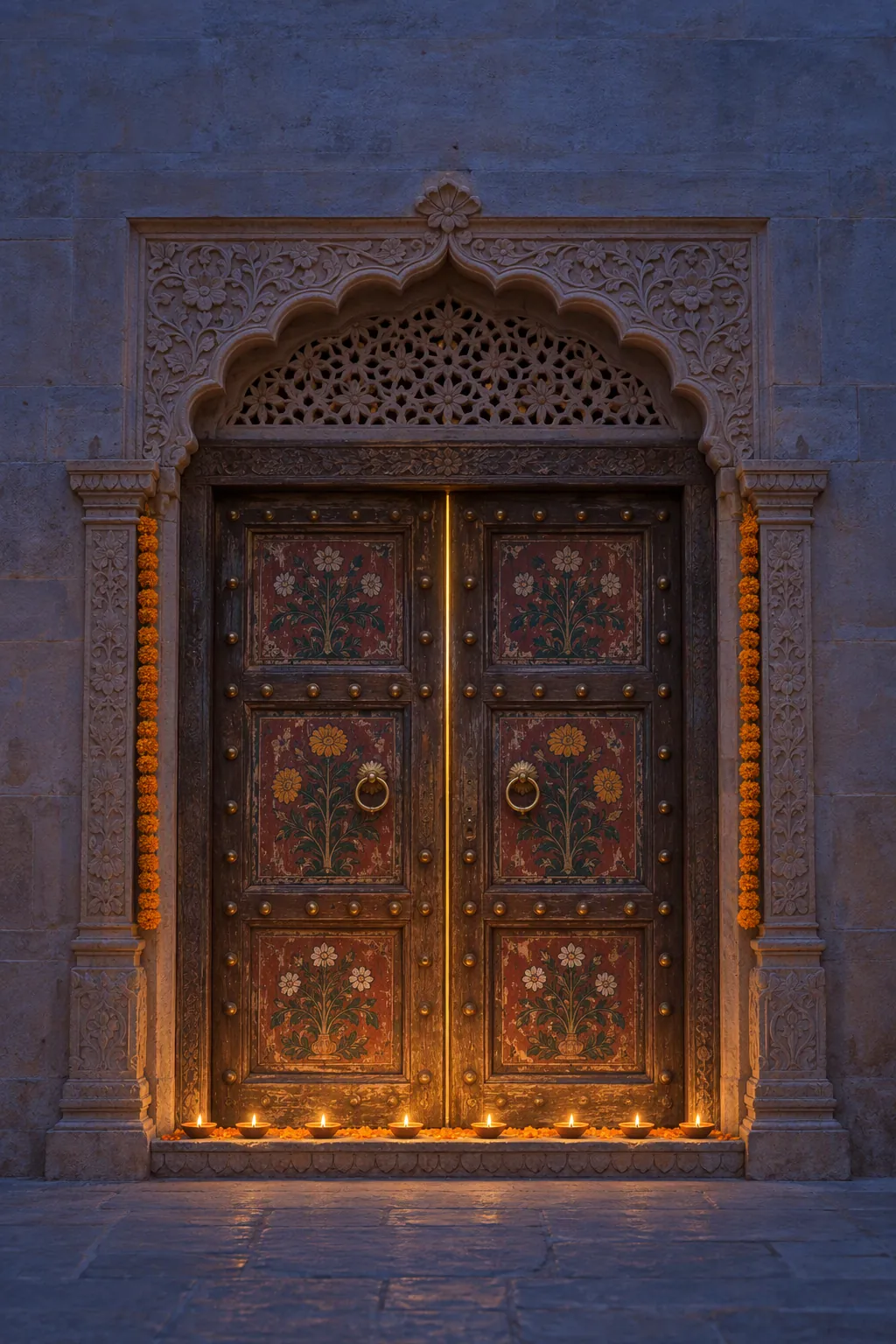
An invite that does something when it’s opened gets opened twice. A Rajasthani wedding begins at the door, at the toran over the bride’s entrance, and Jharokha begins there too. Your guest taps, carved doors swing open at dusk, and a courtyard of diyas and marigolds is waiting with your names.
Match the opening to the wedding. A lotus that blooms under your guest’s thumb (Pichwai) suits a haldi or a day wedding. A brass lamp your guest lights (Temple) is made for South Indian weddings. Mehfil lights a palace hall one candle at a time for the sangeet, and Parda’s velvet curtains part on a stage for a nikah.
For something quieter, Ivory and Safar open from an envelope. Your guest breaks a wax seal pressed with your initials, in English or Hindi, or with a lotus, a rose or a marigold. If you’re printing cards as well, a brass seal stamp and a stick of wax do the same on paper, with no help from us.
Open Jharokha like a guest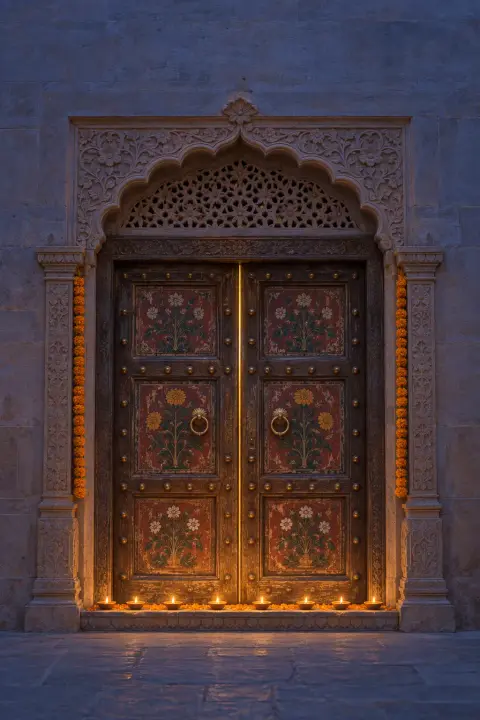



6. Let your guests walk in
Some invites open. A walk-through lets your guests step inside. In Jheel Mahal they sail across the lake at dusk, step off at the palace and walk in to your wedding. Every function gets a room of its own, and they reply from a balcony as the lake turns blue.
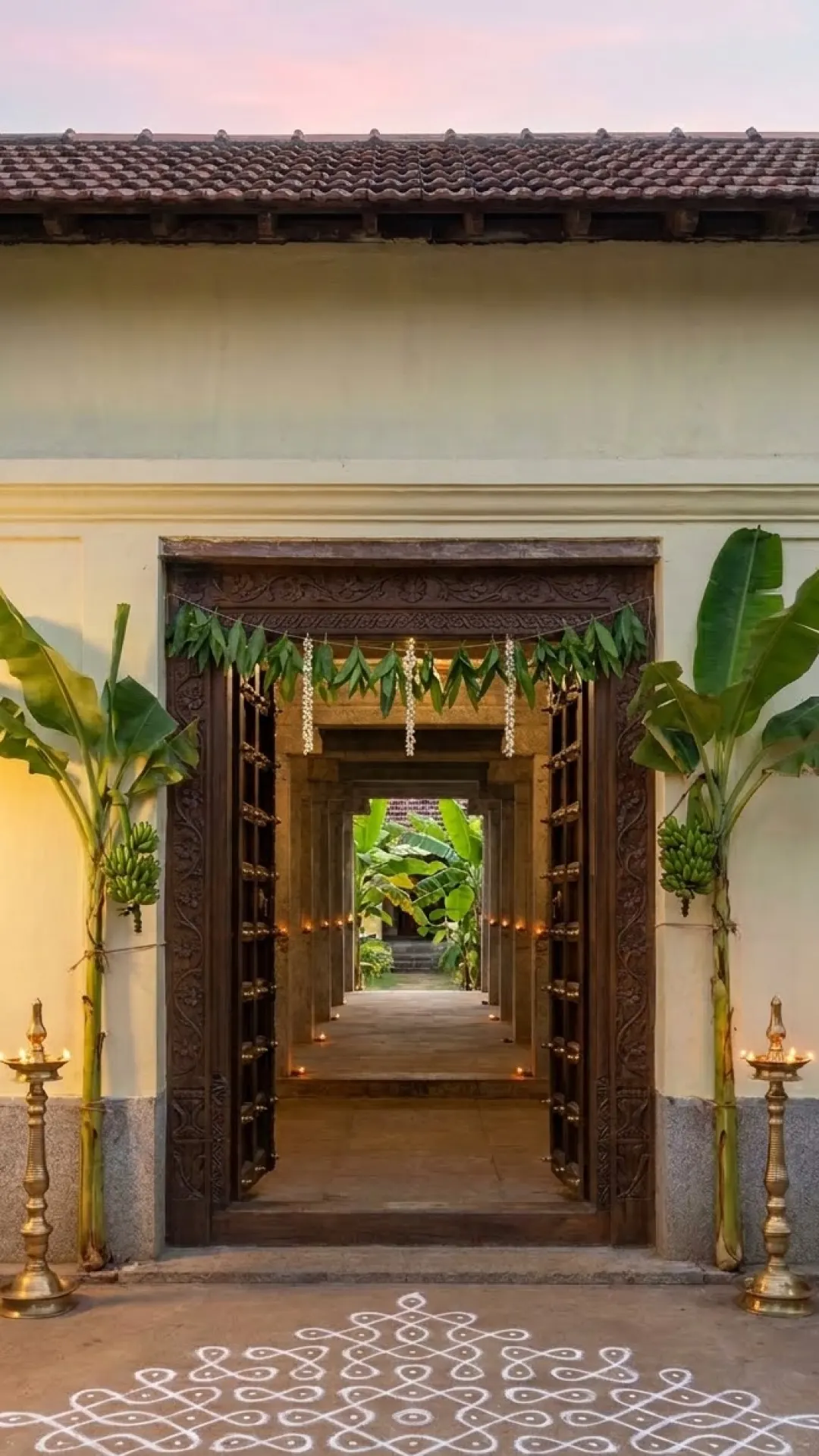
Mandapam is the temple-town version, for Tamil, Telugu and Malayali weddings. Guests step over a fresh kolam at dawn, walk a corridor of jasmine and lamps, and reach the mandapam as the sun rises. The haveli walk takes them through the doors and across the courtyard, room by room.
Walk-throughs come with the Royal plan, ₹499 a month after a ₹1 day. Send the link rather than a screen recording, because the link always shows your latest times.
See every walk-through
7. Write it in your parents’ voice
On most Indian cards the parents do the inviting, and many elders still expect it. A formal line in their names tells every relative this is a family wedding, not only yours.
In English it can be as simple as “We warmly invite you and your family to the wedding of our daughter Tanya with Vikram.” In Hindi it reads “Hamari suputri Sau. Kan. Tanya sang Chi. Vikram ke shubh vivah ke paavan avsar par aap saparivaar saadar aamantrit hain.” Let both sets of parents read it before it goes out.
The best version of this needs no app. Ask your mother for her own wedding card, if it survived. A line from it, or the way it named the grandparents, can come straight onto yours.
Copy the words for our card8. Let the children do the inviting
Bal manuhar is a little verse on the card in the children’s voice, the kind of request nobody can say no to. It’s a Marwari and Rajasthani custom that Hindi-speaking families everywhere have taken to.
It suits any wedding with nieces, nephews or small cousins in the family. One for didi’s wedding ends “Dholak, laddoo, masti, gaana, bhool na jaana, jaldi aana.” Sign it with the children’s names, oldest first, near the end of the card after the families who welcome the guests.
Add the children’s names to your invite and it carries their line as well: “Aarav and Myra say: you must come to the wedding!”
Pick a bal manuhar line9. Give each family its own link
One forward to three hundred people treats your Bua like a stranger. A link for each family greets them by name and shows only the functions they’re invited to, so the haldi can stay with close family while the reception is for everyone.
Then add a line for the families who matter most. “Bua, you taught me to ride a bicycle and to never give up. Come and bless us.” Only they will see it.
Sort your list into close family and everyone else before you send a single link. It takes an evening, and it saves the awkward call when someone spots a function they weren’t asked to.
See a family’s own invite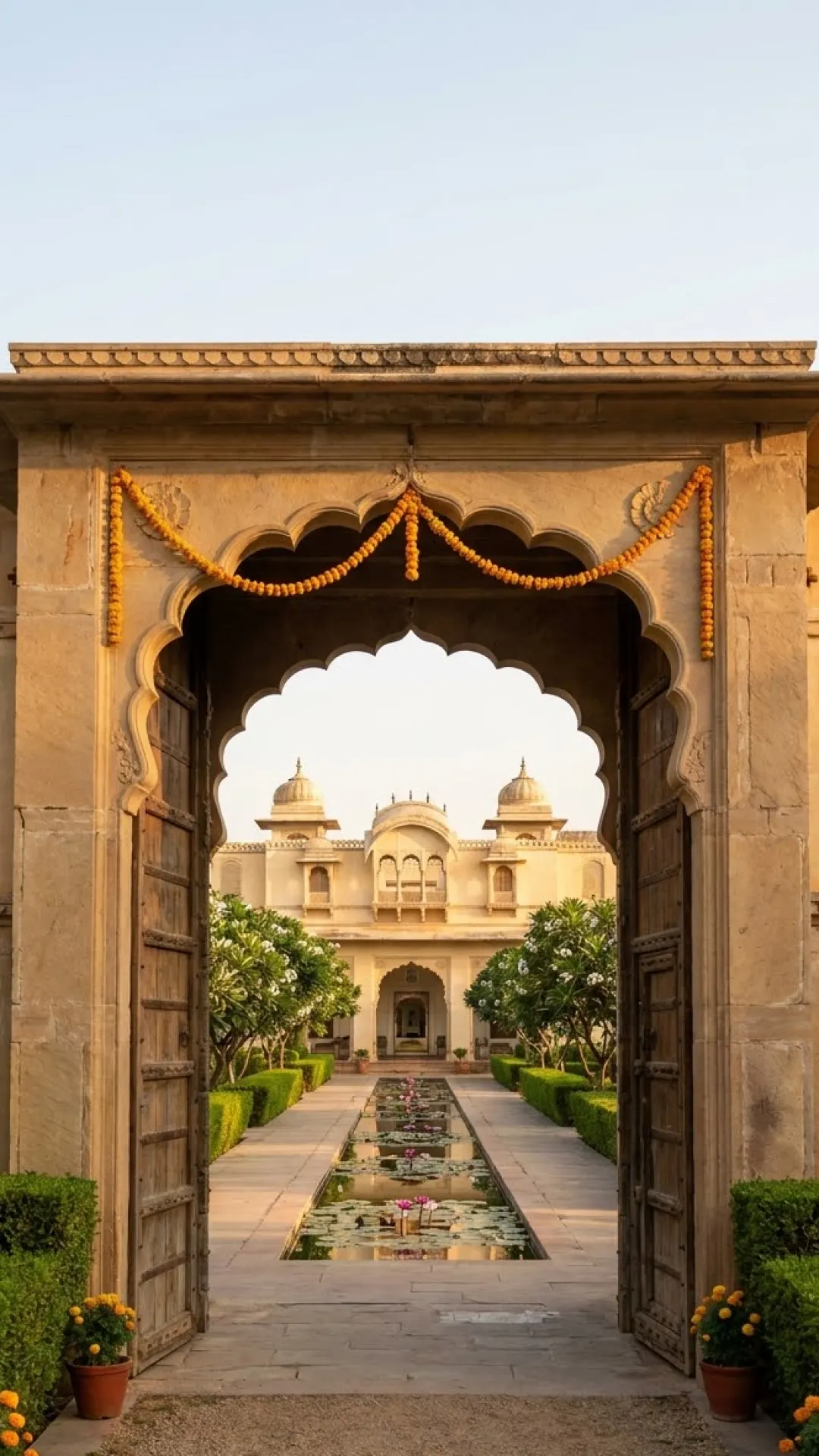
10. Give every function its own card
The haldi, the mehndi and the sangeet each have a mood, and guests dress for it. A card for each function, with its time, its place, what to wear and its colours, answers the question every aunty asks the week before.
Yellow and white for the haldi, in clothes nobody minds staining. Greens and soft pinks for the mehndi. Jewel tones and a little sparkle for the sangeet. Genda, with its strings of marigolds, is made for the haldi and mehndi, and Mehfil for the sangeet night.
Send each card the day before its function, with the map, so nobody has to call and ask.
See a haldi card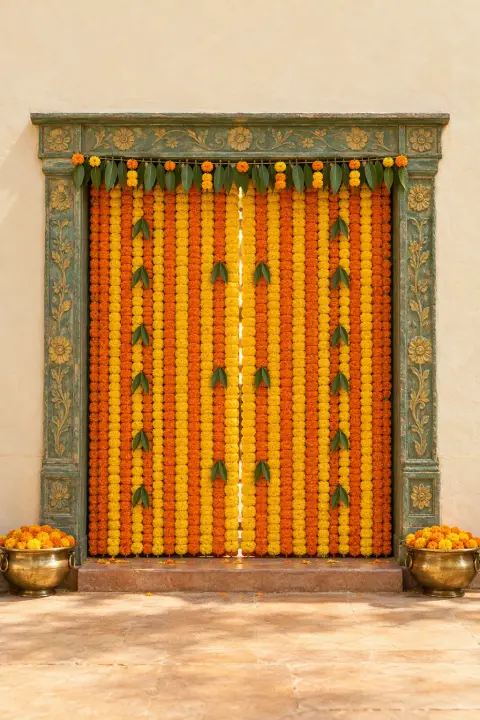
11. Pin the venue and tell guests where to stay
Every wedding has the rishtedaar who calls twice to ask the venue. Give them a map pin that opens Google Maps at the gate, not somewhere in the middle of the city, and test it by asking a friend to follow it.
For guests coming from far, add how to get there and where to sleep, in plain lines. “Udaipur airport is 40 minutes away. We’ll meet every flight on the 12th.” “Rooms are held for family from the 12th to the 15th.” Then a name and a number to call when they land.
Safar is made for families who travel. A little plane flies from one family’s city to the wedding as guests scroll, and every family replies on its own boarding pass.
Open Safar like a guest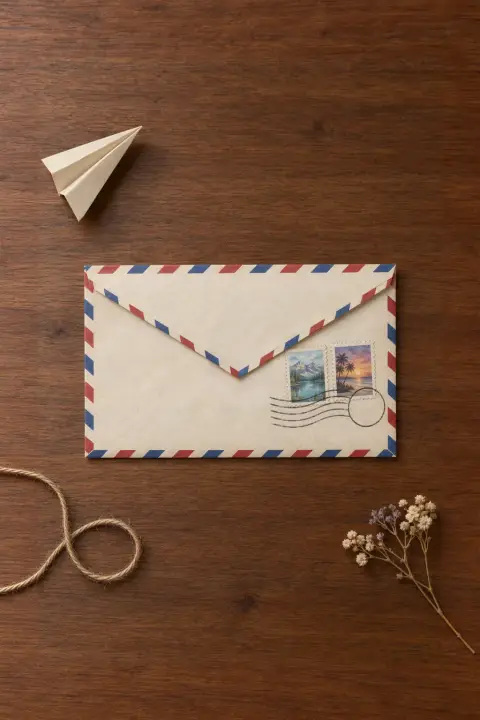
12. Ask for a reply for every function
A single yes tells you very little. The haldi may fill a courtyard while the reception fills a lawn, and the caterer, the hotel and the decorator each need the number for their own night.
So ask every family how many are coming to each function. Their reply comes to your WhatsApp, and pasting the replies in gives you the headcount for every function.
Ask a week or two before the first function and send one gentle reminder. The card can say it simply: “Please let us know how many of you are coming to each function.”
See how replies work13. Print a few cards for Dadi
WhatsApp will carry most of your invites. But some elders expect a card in their hands, and nothing on a phone replaces that.
You don’t need hundreds. Print only for the elders and the homes you’ll visit. Saath’s printed invitation is 6 by 9 inches, in the same design as your invite, with a QR code that opens your invite, so if the sangeet moves by an hour, Dadi’s card still leads to the right time. We learnt this the slow way: when our own sangeet time changed, it meant another round of drafts.
Printed cards usually go out six to ten weeks before the wedding. Take the file to a local printer and ask for one sample before the full run.
See the printed card14. Take the first cards yourselves
This one needs no app at all. In many families the first card goes to Ganesh ji or the family deity before any guest gets one, and the next few go by hand to the elders, with a box of mithai.
List the homes you’ll visit together, both families’ elders first, and keep an afternoon for each part of town. A ten-minute visit says more than any invite we could make.
15. Write to your closest friends by hand
For the ten or fifteen people who made you who you are, write a few lines in your own handwriting. Skip the quotes from the internet and use a real memory: “You were the first person I told about Vikram. You’d better be the loudest at the sangeet.”
Tuck it into their printed card, or send a photo of the page with the link. It costs an evening, and it’s the part of the invite they’ll keep.
Questions couples ask
What makes a wedding invitation unique?
The details only your family could have: your names the way your family writes them, your parents doing the inviting, a line from the children and a note for the people who matter. A rare design helps, but a card with your Bua’s name on it is the one that gets kept.
Is a WhatsApp invite enough for an Indian wedding?
For most guests, yes. For the elders who expect a card in hand, print a few and take them yourselves, or call. A printed card with a QR code opens the same invite, so nobody misses a change of time.
When should we send our wedding invitations?
The save the date three to twelve months ahead, or six or more for a destination wedding. The invitation six to ten weeks before, printed cards included. Each function’s card the day before it, and ask for replies a week or two before the first function.
Can each family get a different invite?
Yes. Each family gets its own link that greets them by name and shows only the functions they’re invited to, with a line from you if you want one.
Can we try these designs before we pay?
Yes, for free. Type your names on any design and see it the way your guests will, with no sign-up. To publish and download, try a plan for a day for ₹1. After that Premium is ₹299 a month, and Royal, with the walk-throughs, is ₹499.
See these ideas with your names
Type your names and every design redraws in them. Trying them costs nothing and needs no sign-up.
See every invite